


Dental implants are an effective treatment for replacing missing teeth and restoring a natural-looking smile over the long term. This technique involves placing an implant, usually made of titanium, into the jawbone to act as an artificial tooth root. A replacement tooth is then secured to the implant, providing stability and an appearance that closely resembles natural teeth.
Many patients choose this treatment because it provides a long-term solution for missing teeth and helps improve chewing and speech. It also contributes to preserving the structure of the jawbone and reducing bone loss. Thanks to advances in dental technology, this procedure has become a common and reliable treatment option when performed by experienced dentists at specialized centers.
Many patients also research treatment options abroad. To learn more about the services available to international patients and the treatment process, you can find further information about dental implants in Turkey.
| Anesthesia | Local anesthesia |
| Procedure duration | Approximately 10–30 minutes per implant |
| Initial recovery period | Usually 3–7 days |
| Implant integration period | Approximately 3–6 months |
| Placement of the permanent crown | Usually after 3–6 months |
| Longevity of results | Many years with proper care and regular checkups |
What is a dental implant?
A dental implant is a treatment used to replace missing teeth with a natural-looking, long-term solution. During the procedure, a small implant, usually made of titanium, is placed into the jawbone to act as an artificial tooth root. After the healing period required for the implant to integrate with the bone, an abutment is attached, followed by a crown designed to resemble a natural tooth.
This method is considered an effective solution for replacing missing teeth. In addition to providing excellent stability, it offers a natural appearance. It also helps preserve the jawbone and reduce the bone loss that may occur over time. Implants can be used to replace a single tooth, several missing teeth, or an entire toothless arch with the appropriate techniques.
Parts of a dental implant
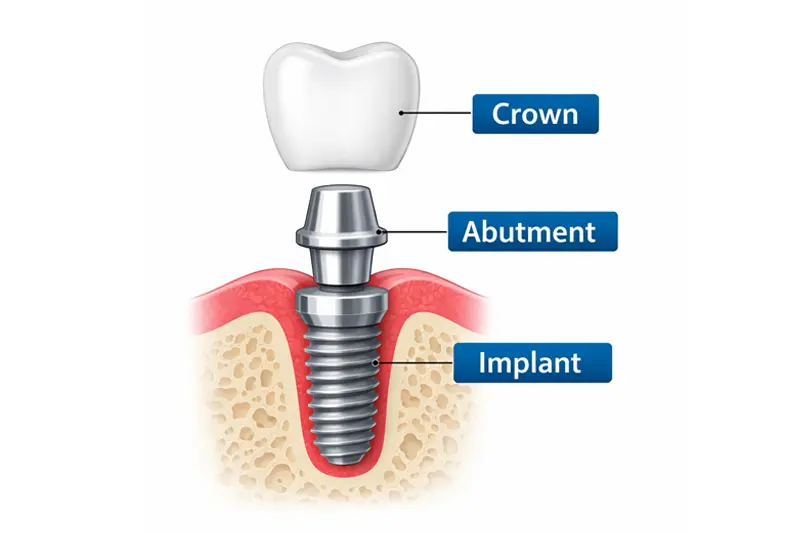
A dental implant consists of three main components that work together to create a natural-looking and stable replacement for a missing tooth: the implant placed in the jawbone, the abutment connecting the implant to the crown, and the crown forming the visible replacement tooth.
Implant
The implant is the main component of dental implant treatment. It is typically a small, screw-shaped fixture made of titanium and placed into the jawbone. Acting as an artificial tooth root, it integrates with the bone during the healing period and provides a stable foundation for the replacement tooth.
Abutment
The abutment is the connecting component between the implant and the crown. It is usually attached after the implant has completed its healing period and serves as the support that holds the crown.
Crown
The crown is the visible replacement tooth attached to the implant. It is designed to match the shape and color of the natural teeth, providing an aesthetic appearance while helping restore chewing function.
How is a dental implant placed?
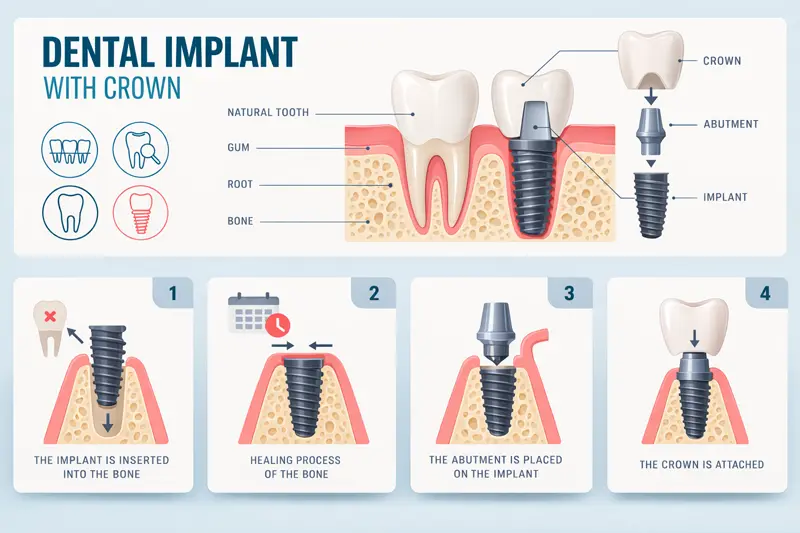
Dental implant treatment consists of several main stages, including examination and planning, implant placement, the healing period, and crown placement.
Total Time: 15 minutes
Examination and planning
During the first stage, the dentist examines the mouth and teeth. X-rays and, in some cases, three-dimensional imaging are used to evaluate the jawbone and the area where the implant will be placed. A treatment plan tailored to the patient is then prepared based on the findings.
Implant placement
The implant is placed into the jawbone through a surgical procedure usually performed under local anesthesia. Acting as an artificial tooth root, the implant provides a stable foundation for the replacement tooth.
Healing period
After placement, the implant requires time to integrate with the jawbone. This process, known as osseointegration, usually takes 3–6 months. However, the duration may vary depending on the patient’s bone structure, general health, and treatment plan.
Crown placement
Once the implant has sufficiently integrated with the jawbone, an abutment is attached. A crown designed to match the shape and color of the patient’s natural teeth is then placed, helping achieve a natural-looking result and restore chewing function.
Estimated Cost: 360 EUR
Modern dental implant techniques
Dental implant technologies have advanced significantly in recent years. These developments allow missing teeth to be treated using different methods based on the patient’s condition. The appropriate technique is determined according to the number of missing teeth and the condition of the jawbone. Advanced implant techniques can be used to replace a single tooth, several teeth, or a complete arch of teeth.
Single-tooth implant
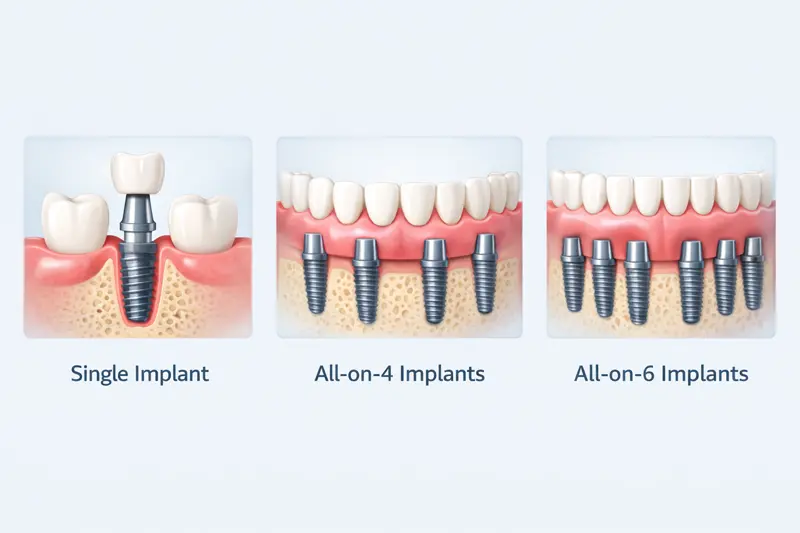
This method is used when a patient has lost only one tooth. An implant is placed into the jawbone at the site of the missing tooth, and a crown is attached to it. This provides an appearance and function similar to a natural tooth without affecting the adjacent teeth.
All-on-4 technique
The All-on-4 technique is used to restore a complete arch of teeth with a fixed bridge supported by only four implants. The implants are placed at carefully planned angles to obtain support from the strongest areas of the bone. This method may be particularly suitable for patients who have lost many teeth or experienced jawbone loss.
All-on-6 implant treatment
With the All-on-6 technique, six implants are placed into the jawbone to support a fixed restoration that replaces the missing teeth in one arch. These implants support a fixed dental bridge and help distribute chewing forces evenly. Offering excellent stability for suitable patients, this method can be used to treat complete tooth loss.
All-on-8 implant treatment (full-arch dental implants)
The All-on-8 technique is a full-arch implant treatment that may be used when all the teeth in one arch have been lost. Eight implants are placed into the jawbone to support a fixed dental bridge.
Who can get dental implants?
Dental implants are a suitable treatment option for many people who have lost one or more teeth. However, a patient’s suitability for implant treatment is determined by evaluating their general health, oral and gum health, and jawbone structure.
People in suitable general health with healthy gums and enough jawbone to support an implant are generally considered good candidates for treatment. Maintaining good oral hygiene and attending regular checkups are also important for the long-term success of dental implants.
In some cases where the jawbone is insufficient to support an implant, additional procedures such as a bone graft may be performed before implant placement.
Suitable candidates for dental implant treatment
- People who have lost one or more teeth
- Patients looking for a fixed alternative to removable dentures
- People with healthy gums
- Patients with sufficient jawbone to support an implant
- People able to maintain good oral care and attend regular checkups
Conditions requiring detailed evaluation
- Patients with advanced jawbone loss
- People with active or advanced gum disease
- People who smoke heavily
- Patients with certain uncontrolled chronic conditions, such as diabetes
- People taking medications that may affect dental implant treatment
These conditions do not necessarily mean that dental implant treatment cannot be performed. Suitability is assessed individually based on a dental examination and, when necessary, the opinion of the relevant medical specialist.
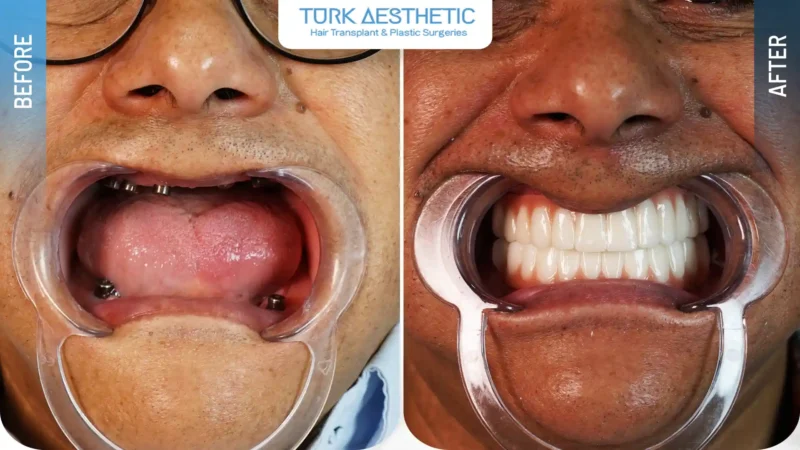
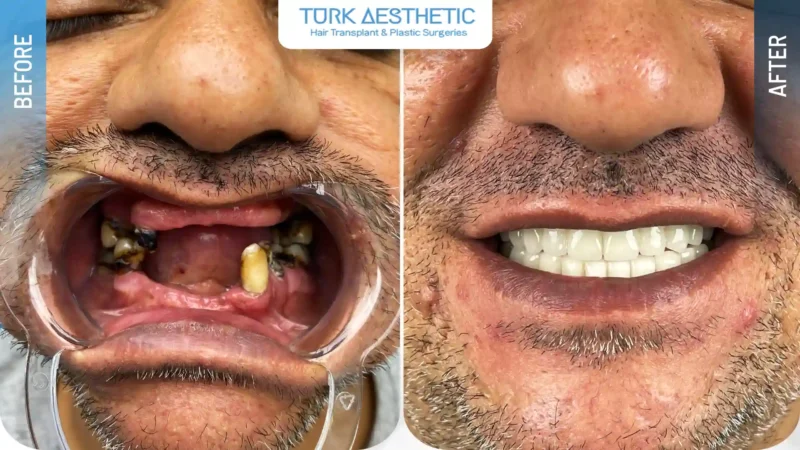
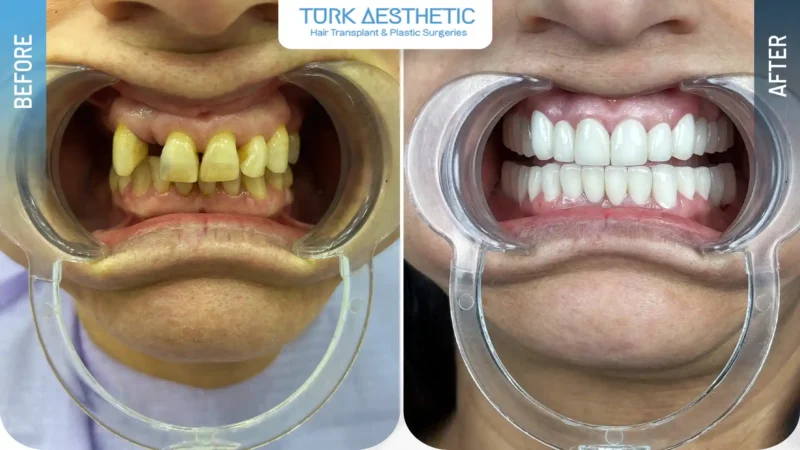
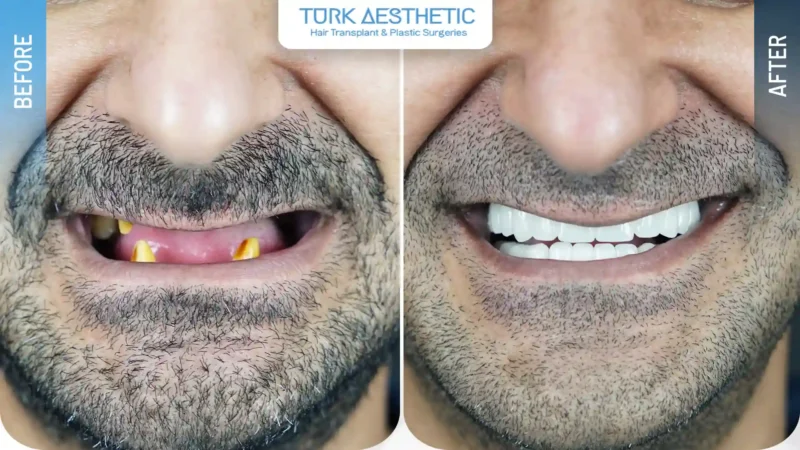
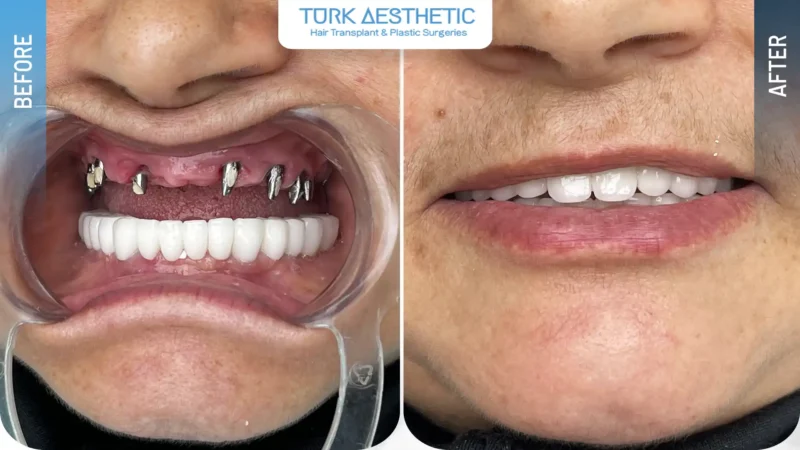
Treatment results: Before and after
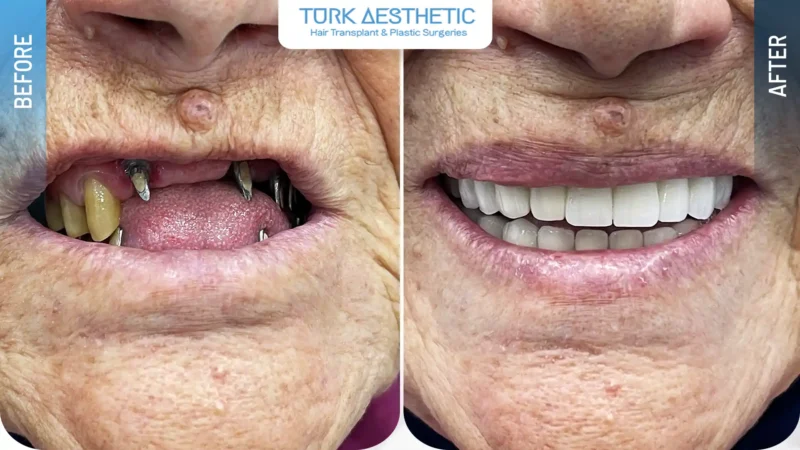
Dental implant treatment can help replace missing teeth and provide a noticeable improvement in the appearance of the smile and oral function. After implant-supported crowns or bridges are placed, patients may be able to chew and speak more comfortably.
Before-and-after photos demonstrate the aesthetic and functional changes that may be achieved with dental implant treatment. Modern dental techniques aim to provide natural-looking, long-lasting results. However, treatment outcomes may vary depending on the patient’s oral structure, jawbone condition, and treatment plan.
- Patients with advanced jawbone loss
- People with active or advanced gum disease
- People who smoke heavily
- Patients with certain uncontrolled chronic conditions, such as diabetes
- People taking medications that may affect dental implant treatment
These conditions do not necessarily mean that dental implant treatment cannot be performed. Suitability is assessed individually based on a dental examination and, when necessary, the opinion of the relevant medical specialist.
Advantages of dental implants
Dental implants provide a fixed, natural-looking, and long-term solution for replacing missing teeth. Compared with removable dentures, their greater stability inside the mouth may help patients feel more comfortable in their daily lives.
The main advantages of dental implants include:
- Natural appearance: Crowns placed on implants are designed to match the shape and color of the patient’s natural teeth.
- More comfortable chewing: Their fixed structure helps improve chewing function and allows patients to eat different foods more comfortably.
- Improved speaking comfort: Implants may support more comfortable speech by reducing the slipping or movement that can occur with removable dentures.
- Jawbone preservation: An implant transfers chewing forces to the jawbone, helping reduce the bone loss that may occur after tooth loss.
- Preservation of adjacent teeth: Unlike a traditional dental bridge, an implant can replace a missing tooth in some cases without requiring healthy adjacent teeth to be reduced.
- Long-term use: Dental implants can last for many years with good oral care and regular dental checkups.
How is the best dental implant brand selected?
The dental implant brand is one of the factors considered when planning treatment. However, the success of implant treatment does not depend on the brand alone. The dentist’s experience, proper planning, the condition of the patient’s jawbone and gums, and post-treatment care also play important roles in the outcome.
Most modern implants are made from biocompatible titanium or titanium alloys. Straumann, Nobel Biocare, and Osstem are among the well-known implant systems used worldwide. However, each brand offers different implant models, sizes, and clinical applications.
The dentist selects the most suitable implant system for the patient after evaluating the bone structure, number of missing teeth, treatment method, and prosthetic plan. The product’s quality standards, clinical history, and availability of replacement components should also be considered when choosing an implant brand.